Dish by dish
Mantije, ćevapi, sudžuk, pies, Sjenica cheese and something sweet with coffee — what Novi Pazar eats, and where to look for it.
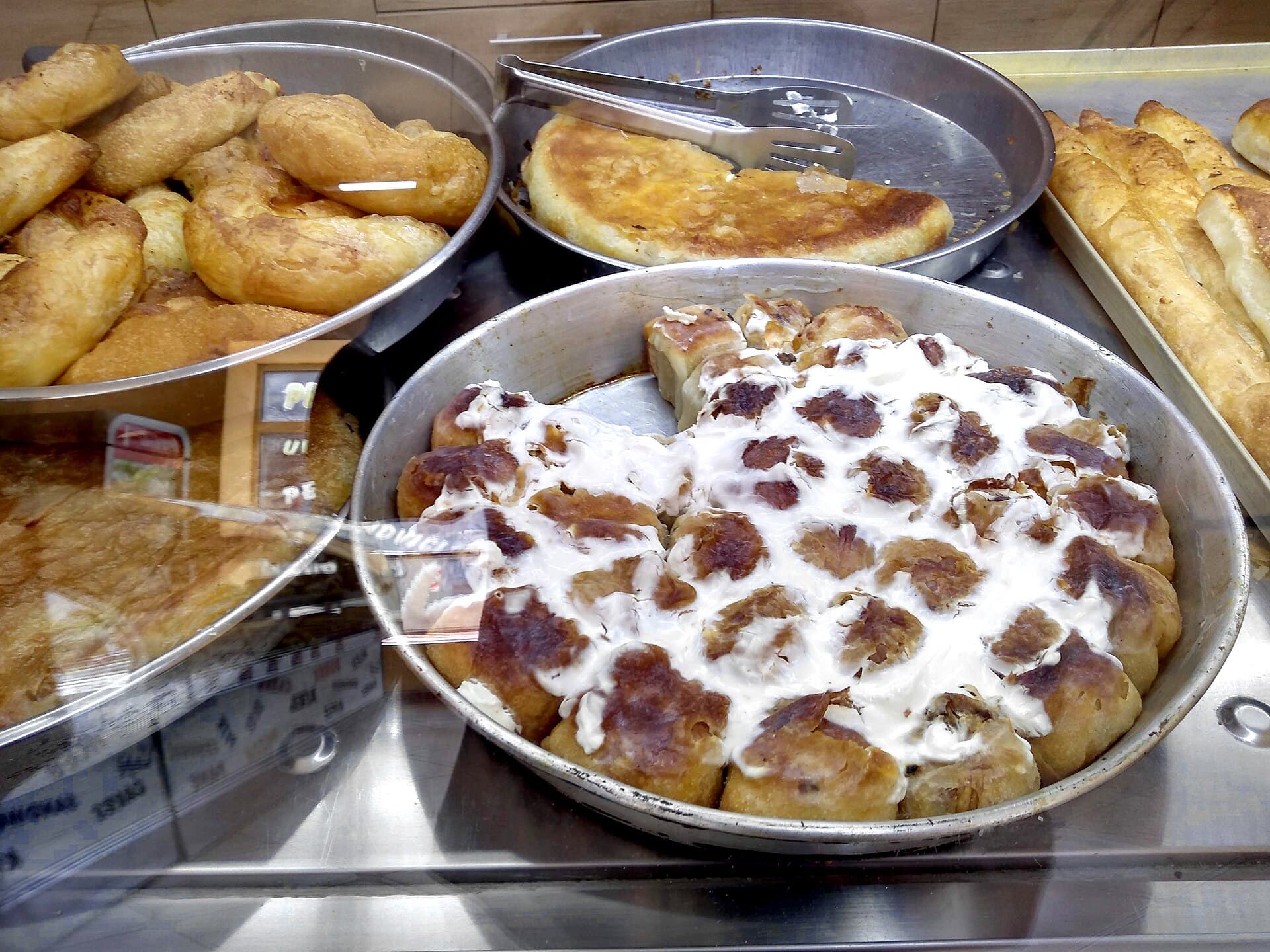
Photo: Novi Pazar mantije, poured over with soured milk · Milica Buha / CC BY-SA 4.0
The city's cooking grew where Ottoman heritage met what the country around it produces — the pastures of Pešter, the dairy and the bakery. It is set out here dish by dish rather than restaurant by restaurant: the tourist organisation keeps the list of places.
Mantije
Small meat pastries baked in a round pan and poured over with soured milk — the dish Novi Pazar is known by.
Key facts
- What it is
- Dough parcels filled with minced meat, baked in a pan
- Served with
- Soured milk
- When
- All day; best straight from the oven
A pan, not a plate
Mantije are made from thin dough cut into squares, filled with minced meat and packed side by side into a round pan. They are baked until browned, then poured over with soured milk, which soaks into the dough and binds the whole thing. They are ordered by the pan, not by the piece.
The city's tourist organisation notes that every household in Novi Pazar jealously guards its own recipe — a polite way of saying that mantije are argued about seriously, and every family has a firm opinion on where the best ones are.
Practical information
- Where
- The city has several shops that make nothing else; the tourist organisation keeps the current list.
Novi Pazar ćevapi
The other thing the city is proud of, and a subject nobody here jokes about.
Key facts
- What it is
- Grilled rolls of minced meat, served in flatbread
- Alongside
- Raw onion, kajmak, soured milk
Why they are remembered
Ćevapi here are made chunkier than in most places and served in a soft flatbread that soaks up the fat and juices from the grill. Finely chopped raw onion comes with them, and kajmak if you want it. A portion is counted in pieces — five, ten, fifteen — and that is the entire menu.
Novi Pazar sudžuk
A dried beef sausage counted among the region's own products.
Key facts
- Base
- Beef
- From the same region
- Sjenica cheese, Sjenica lamb, Sjenica prosciutto
Livestock country
The uplands around Novi Pazar and Sjenica have been livestock country for centuries, and it shows at the table. As early as the 16th and 17th centuries the town was an important centre for trade in livestock products. Alongside sudžuk, the region's recognised products include Sjenica cheese, lamb and prosciutto.
Coffee, tea and the aščinica
The city is known for its teahouses and aščinicas — places where you sit for longer than the errand requires.
Key facts
- Aščinica
- A kitchen serving the day's cooked dishes
- Teahouse
- Tea, coffee and conversation, unhurried
Where kitchens cross
The city's cooking grew at a crossing of influences, and it shows in small habits: coffee is drunk slowly and in small cups, tea is served in teahouses that stay open late, and in an aščinica you eat whatever was cooked that day — no menu, you look into the pots.
Pies and bakeries
Stretched dough in a round pan — burek, zeljanica, sirnica — and a bakery on nearly every corner.
Key facts
- Burek
- With meat
- Other pies
- With cheese, greens or potato
Breakfast bought by the slice
A pita is made from hand-stretched dough, coiled into a spiral or layered flat, and baked in a large round pan. In the bakery it is cut into portions and sold by weight, usually with a yoghurt drink. It is the cheapest, quickest breakfast in town, and bakeries are busiest first thing in the morning.
Sjenica cheese and lamb
Products of the Pešter plateau, an hour's drive from the Novi Pazar table.
Key facts
- Origin
- The Pešter plateau
- Cheese
- White cheese in slices, ripened in brine
The plateau behind the city
Sjenica cheese counts among the recognised products of this part of Serbia, along with Sjenica lamb and prosciutto. It comes from the Pešter plateau, the cold, windswept country west of Novi Pazar where livestock has been the main occupation for centuries. At the market it is sold in slices, out of brine.
Oriental sweets
Baklava, tulumbe and urmašice — what is ordered after a meal with coffee, and all of it steeped in syrup.
Key facts
- Baklava
- Layers of filo, walnuts or hazelnuts, syrup
- Tulumbe
- Fried batter in syrup, served cold
- Urmašice
- Semolina cakes shaped like a date
- With what
- Coffee from the džezva, or tea
Everything ends in syrup
The sweets eaten here come out of Ottoman cooking and share one method: something is baked or fried, then, still warm, drenched in šerbe — a thick syrup of sugar and water. Baklava is built from filo sheets and ground walnuts or hazelnuts; tulumbe are fried batter, crisp outside and soaked through, eaten cold; urmašice are semolina cakes shaped to resemble the date they are named after.
Sweets here are not eaten on the move. They are ordered in a pastry shop or a teahouse, with coffee from the džezva or with tea, and you sit with them — the same rule that governs everything else in this city.
Practical information
- Where
- Pastry shops and teahouses in the centre; the tourist organisation keeps the current list.