Two fortresses, two capitals
The fortress at the heart of the Ottoman town, and the hillforts of the Serbian medieval state ten kilometres west.
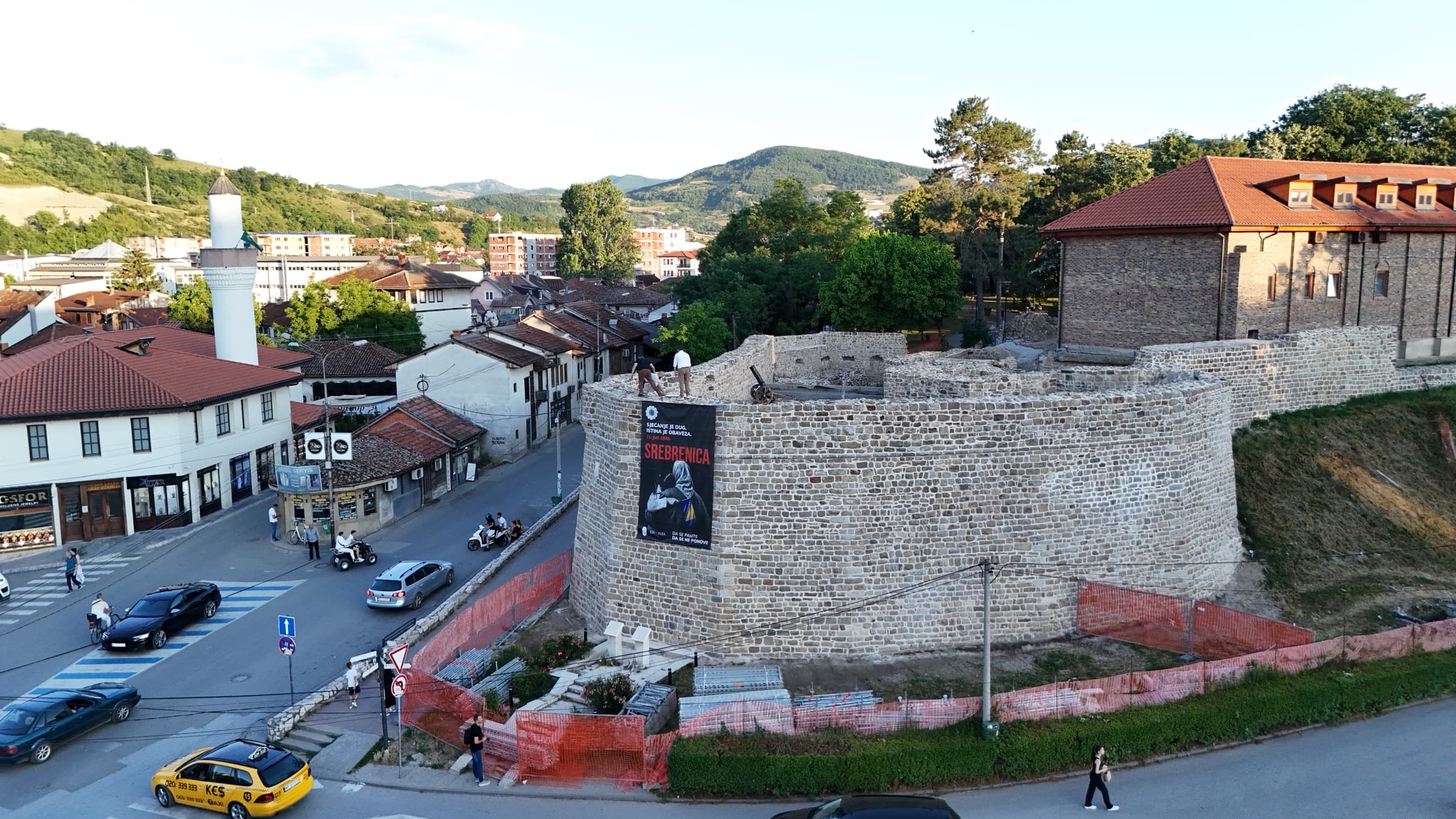
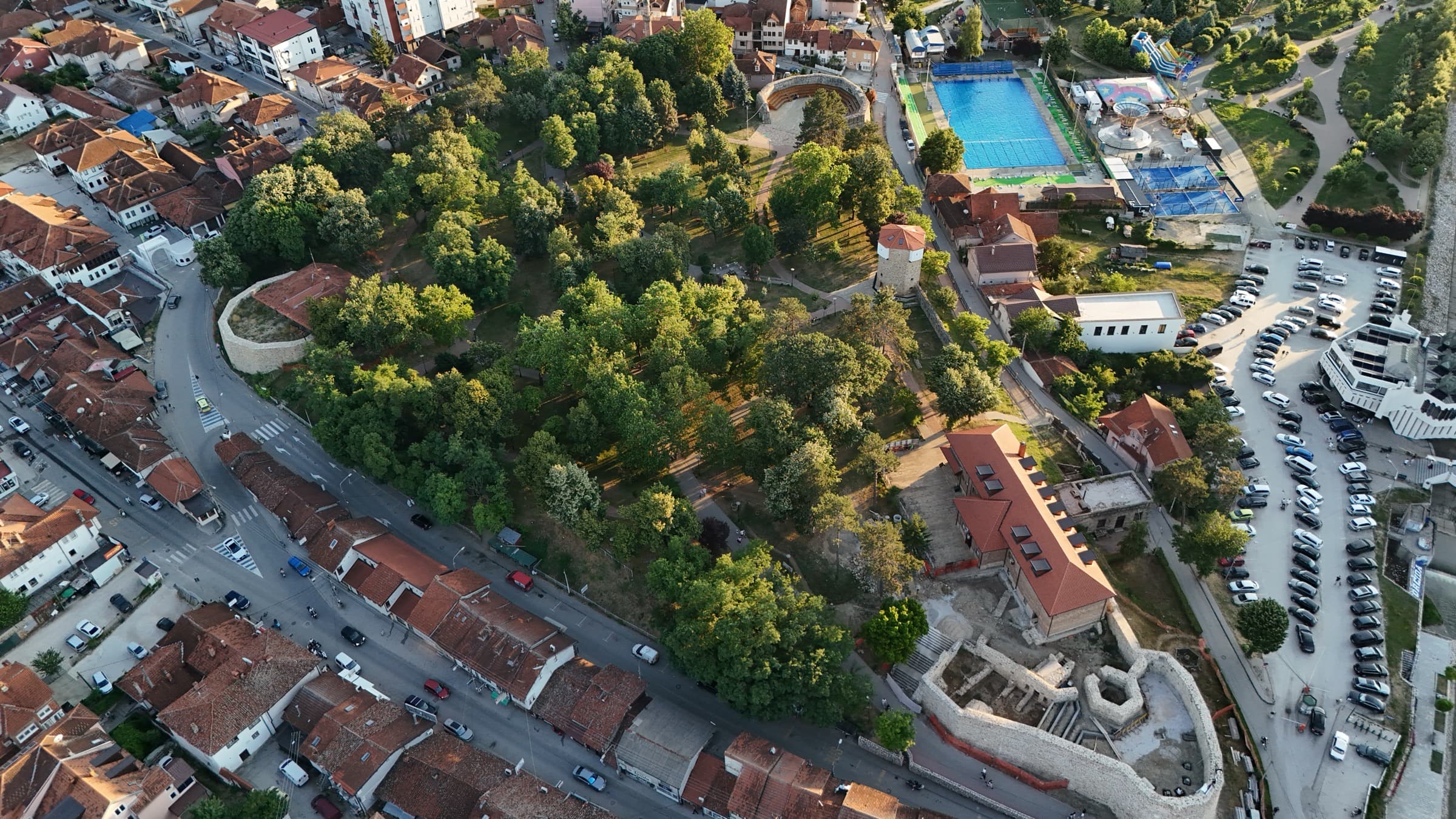
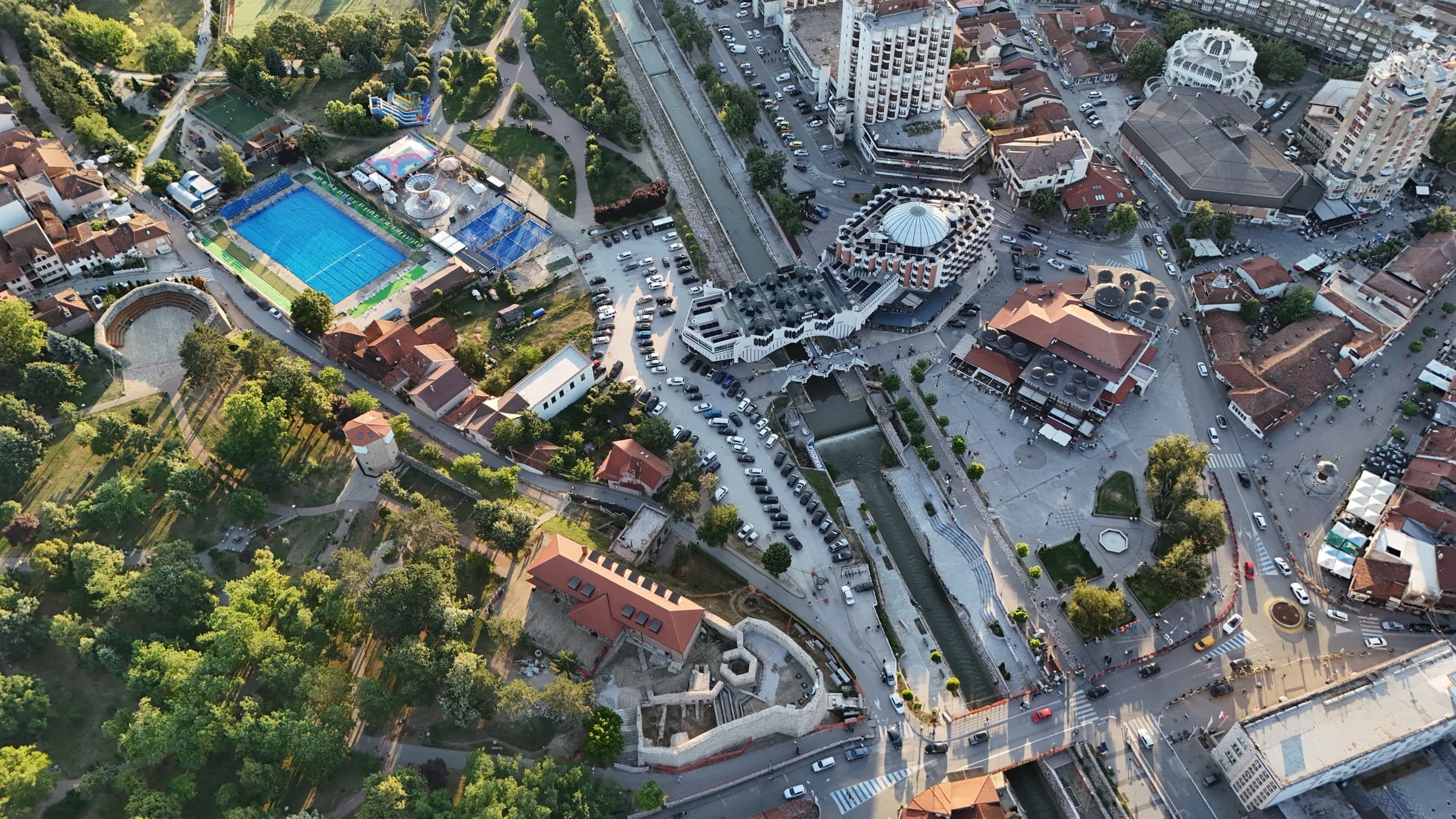
Photo: The rampart of the Novi Pazar fortress, in the city centre
The fortifications testify to the strategic importance of this area throughout history, from medieval Serbia to the Ottoman Empire.
Novi Pazar Fortress
A fortress in the middle of the city, today a public park inside its ramparts, with the watchtower that has become Novi Pazar's emblem.
Key facts
- City founded
- 1461, by Isa-beg Ishaković
- Ground plan
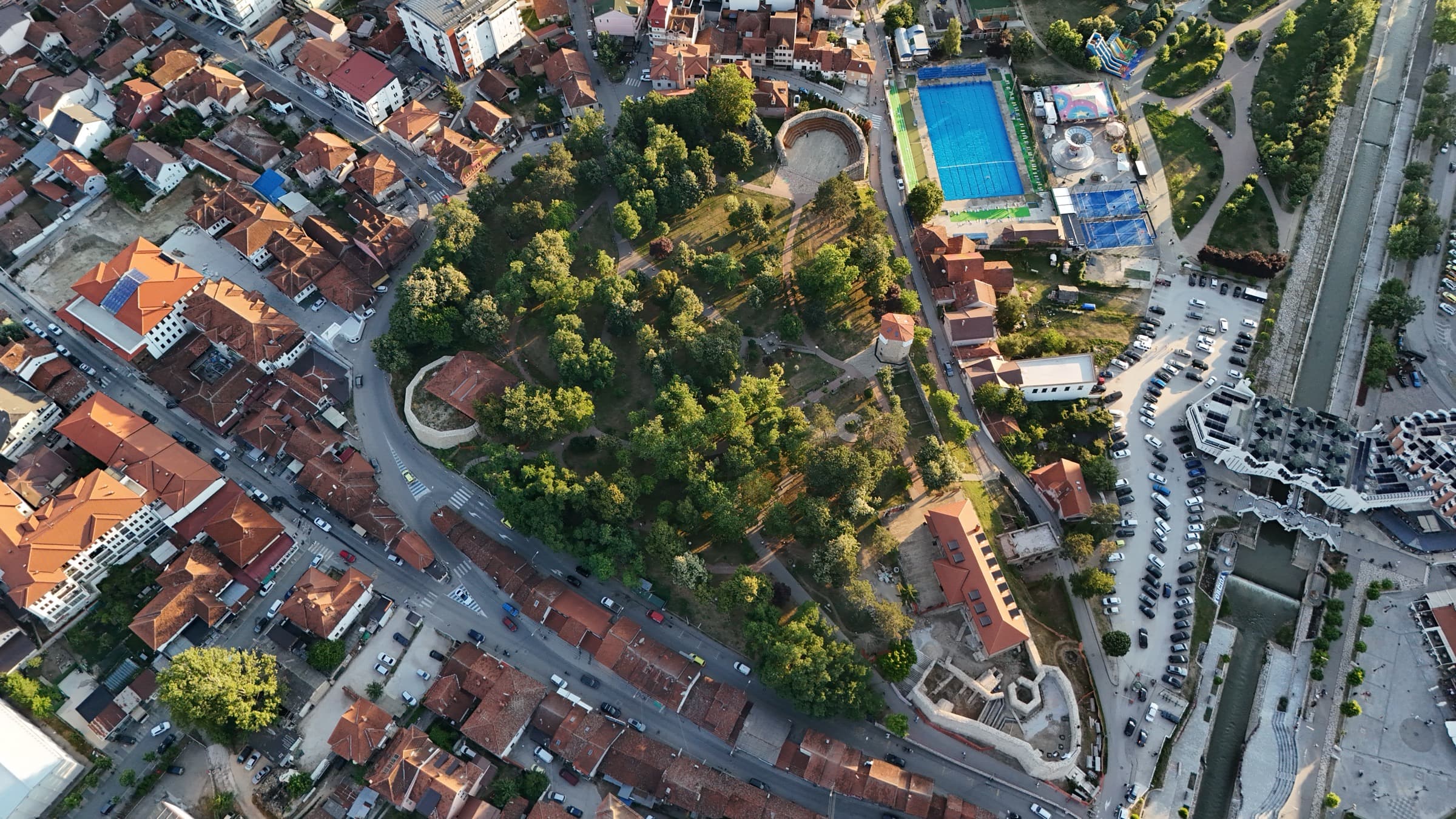
- Three bastions in a near-equilateral triangle, sides about 200 m
- Watchtower
- Octagonal base, about 15 m high
- Protection
- Cultural property since 1990, with the old bazaar and the Altun-alem mosque complex
- Today
- A public park in the city centre
A city built around its market
Novi Pazar was founded in 1461 by the Ottoman commander Isa-beg Ishaković, who endowed the new settlement with a mosque, a bath, a marketplace and a hostel. The city's name — "new market" — states its purpose: trade on the road linking Dubrovnik with Constantinople.
The fortress was that settlement's stronghold. It stands on a low rise on the right bank of the Raška, right beside the market — locals still call it simply Bedem, "the rampart". What you walk through is not a single building from a single century but layer upon layer: an Ottoman core from the 15th century and ramparts which, in the form they now stand, were largely rebuilt in the 19th.
A triangle with three bastions
The fortress is laid out as a near-equilateral triangle: three corner bastions with sides of about two hundred metres, joined by a stone rampart. The corner towers are dated to 1750. The circuit is therefore short — a few minutes to walk the whole perimeter — but from the rampart it is plain why the fort stands where it does: below it are the approaches to the market and the crossings of the river.
The watchtower
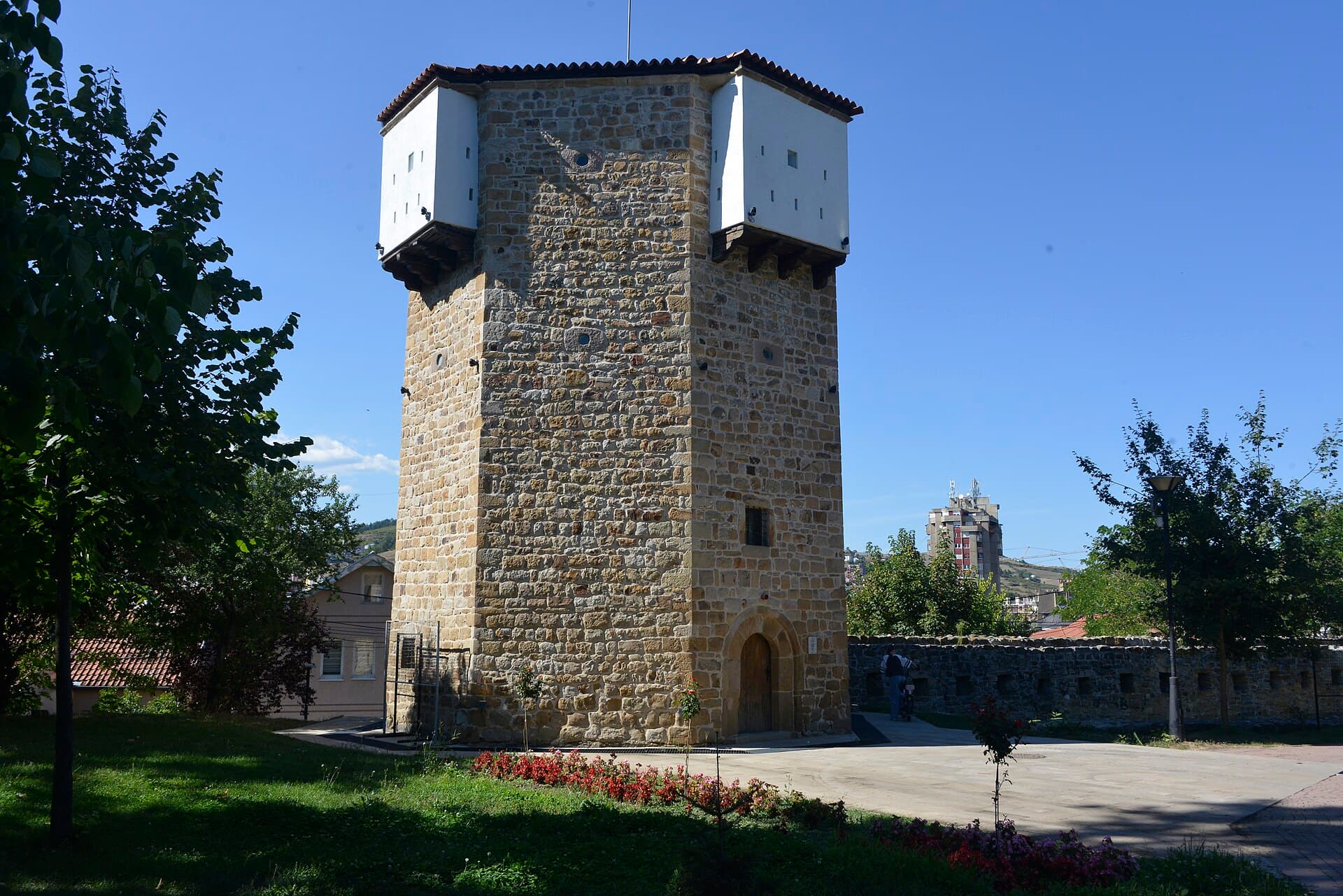
The watchtower — also known as Sejir-kula or the Old Lookout — has an octagonal base and stands about fifteen metres high. It is now the city's most recognisable outline: the tower with the bastions of the rampart is the central motif of the Novi Pazar coat of arms.
A park inside the walls
The interior is laid out as a park and open to walk through; the city library stands inside the ramparts. In 1990 the fortress was protected as cultural property, as part of a spatial cultural-historical unit together with the old bazaar and the complex around the Altun-alem Mosque. It is the easiest place to begin a tour of the city: the old market, the mosque and the banks of the Raška are all a few minutes away on foot.
Practical information
- Entry
- The park inside the ramparts is open and free to enter.
- Location
- In the centre of Novi Pazar beside the Raška river — walking distance from the main square.
Stari Ras
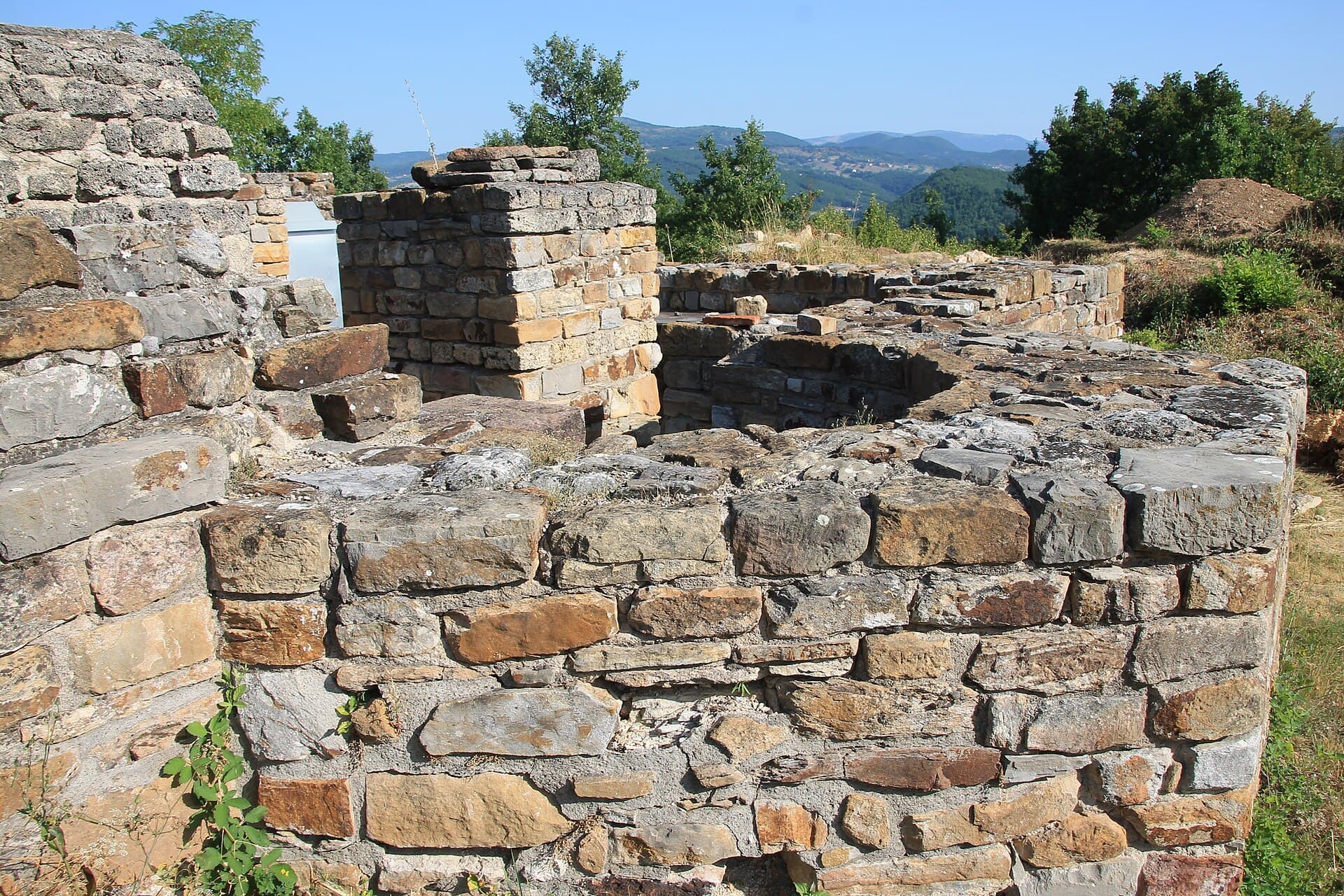
The fortified core of the Serbian medieval state, today an archaeological site on the hills west of Novi Pazar.
Key facts
- Capital
- Around 1170—1276
- Strongholds
- Gradina-Pazarište and Gradina-Postenje
- Earlier fort
- The Roman castellum Arsa, refortified in the 6th century
- Distance
- 10—11 km west of Novi Pazar
- Status
- UNESCO World Heritage since 1979
Before the Nemanjić: Arsa
The hills above the valley were inhabited from prehistory and through the Roman period. In the 6th century the Byzantine emperor Justinian I (527—565) refortified the Roman castellum of Arsa, but both hillforts were damaged and abandoned at the beginning of the 7th century, during the Avar and Slavic incursions.
The capital that vanished
Ras was the fortified centre of the Serbian state during the rise of the Nemanjić dynasty, roughly from 1170 to 1276. Its defences rested on two main strongholds — Gradina-Pazarište and Gradina-Postenje — which most likely worked as a single system; the archaeological evidence places the medieval city of Ras at Postenje. In the 1230s a Serbian mint operated here.
The final desolation came early in the 14th century, in the reign of King Milutin (1282—1321). Below the strongholds a market settlement called Trgovište grew up in the 14th century, and it forms the third part of the archaeological complex today. Novi Pazar is not a continuation of Ras: the city was founded later, in the Ottoman period, a few kilometres to the east.
What you see today
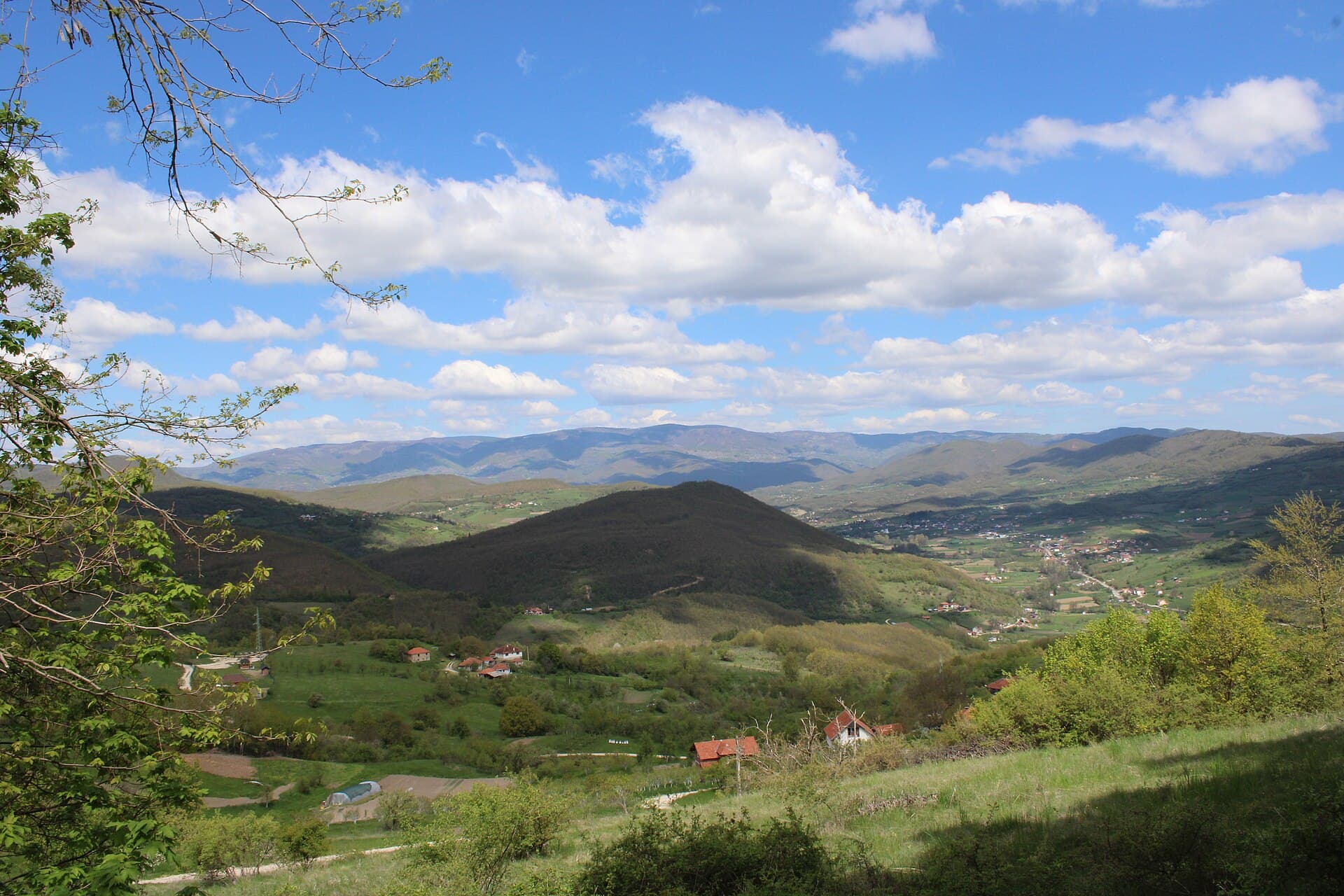
What remains are the foundations of ramparts, towers and cisterns on the plateaus above the valley. The site is not laid out as a museum: there are no covered walkways or permanent displays, so the climb over open ground is part of the visit. Stari Ras, together with Sopoćani, was inscribed on the UNESCO World Heritage List in 1979.
Practical information
- Terrain
- Unmade paths and a climb; hiking shoes and water are needed, especially in summer.
- Guide
- The remains are hard to read without interpretation — guides can be arranged through the Novi Pazar tourist organisation.