A king's endowment
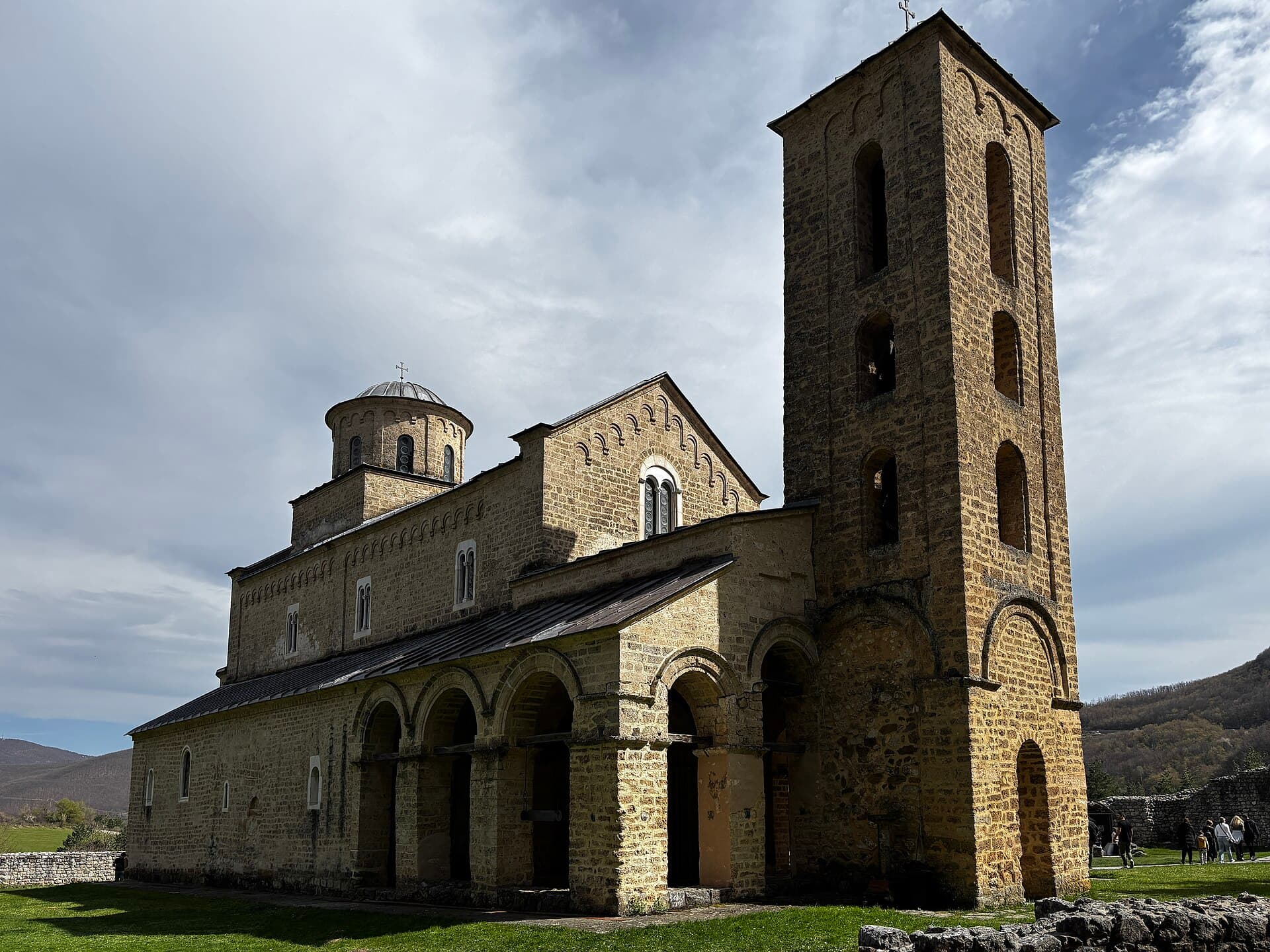
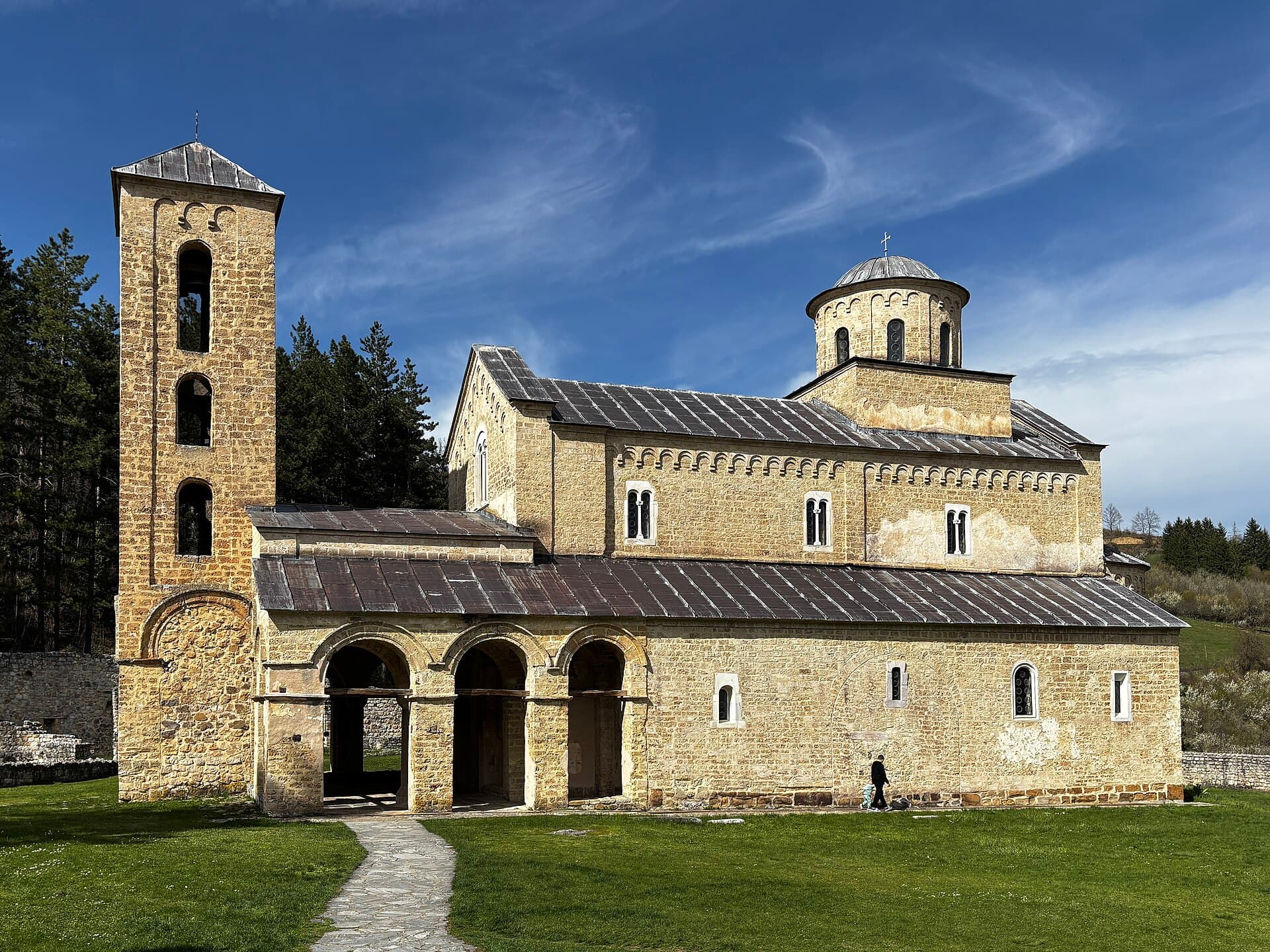
Sopoćani was raised by King Stefan Uroš I between 1259 and 1270 as a church dedicated to the Holy Trinity and as his own intended burial place. It belongs to the Raška school: a Romanesque exterior wrapped around a Byzantine interior, the synthesis that defined Serbian medieval building.
The church stands in the valley of the Raška river, some fifteen kilometres west of present-day Novi Pazar, in the heart of the Ras region — the core of the Serbian medieval state.
The Dormition of the Virgin
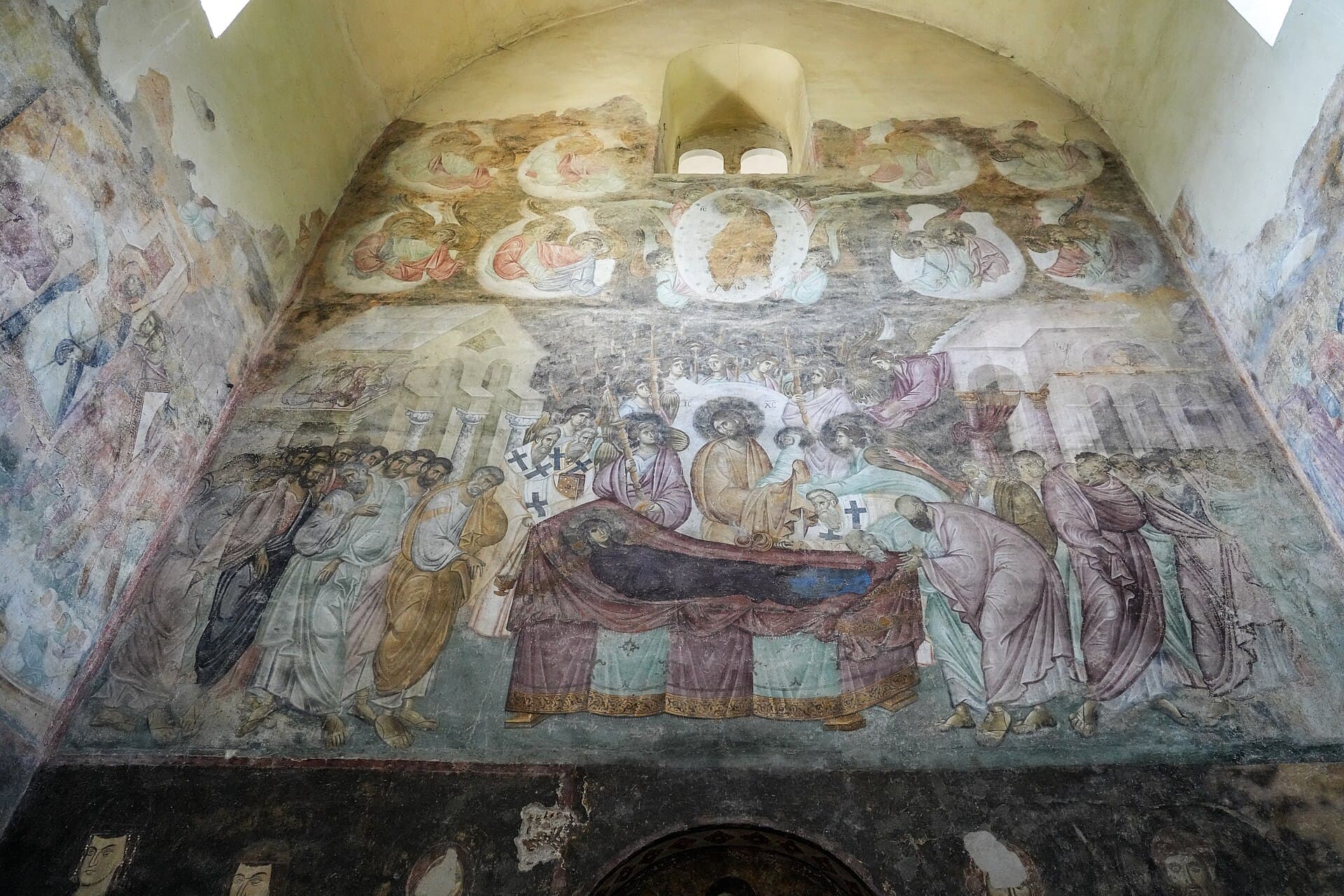
The frescoes were painted between 1263 and 1270. The best known is the Dormition of the Virgin on the west wall of the nave — a large, still composition of monumental figures, made at the moment of transition between the Komnenian and Palaiologan styles of Byzantine art.
The colours survived through misfortune: once the roof lost its lead, the frescoes stood open to the sky for centuries, yet a thick lime ground and the painters' technique kept them from disappearing altogether.
Burning and return
In 1689 Ottoman troops set the monastery on fire and carried off the lead from its roof. Sopoćani then stood abandoned for more than two centuries. Restoration came in two campaigns — 1925—1929 and 1949—1958 — after which monastic life returned.